Experimental Archaeology

Researchers Suggest New Hypothesis for Hominin Invention of Stone Cutting Tools
The use of stone hammers to produce sharp stone flakes — knapping — is traditionally thought to be a process that ancient humans started doing intentionally or by accident before looking for things, such as animal carcasses and hard fruits, to cut. It is a defining feature of hominins and is seen as…
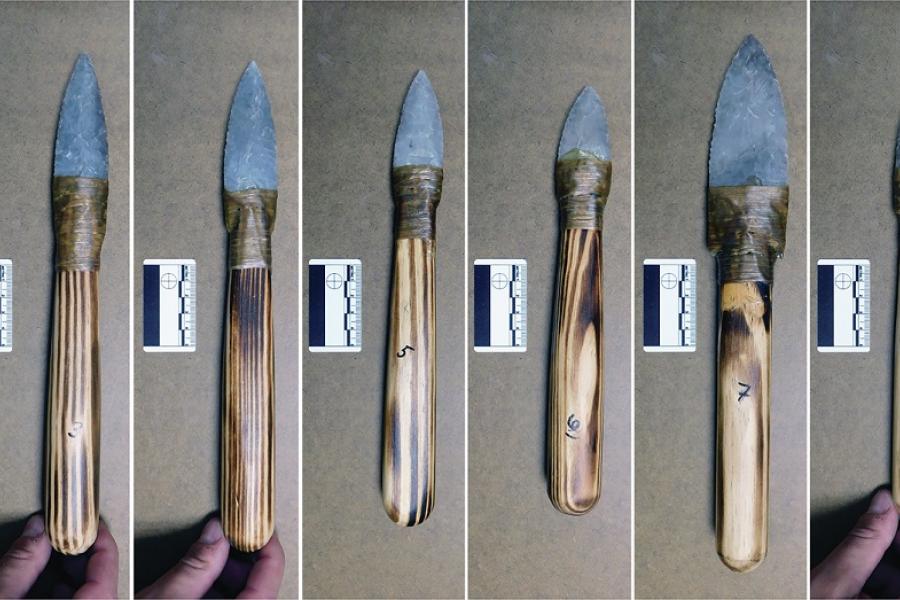
Experimental collaboration between archaeologists and MeatEater highlights the prevalence of equifinality in archaeological interpretation
91²Ö¿â’s experimental archaeologists, along with those from several other universities, joined forces with the popular hunting, outdoors, and conservation media platform, MeatEater, Inc., for a unique animal processing experiment, shedding new light on ancient stone knives and showcas…

We Are Here for the Students: Anthropology Professor Discusses Importance of Mentorship
Metin Eren, Ph.D., associate professor of archaeology at 91²Ö¿â, was recently interviewed on a CITI “On Campusâ€� podcast hosted by Ed Butch and shared his insights on the importance of mentoring students. “It’s something that all faculty need to take very seriously,â€� Eren said…

Atlatl Weapon Use by Prehistoric Females Equalized the Division of Labor While Hunting: 91²Ö¿â Archaeology Professors Led the Experimental Study
A new study led by Archaeologist Michelle Bebber, assistant professor in 91²Ö¿â’s Department of Anthropology, has demonstrated that the atlatl (i.e. spear thrower) functions as an “equalizer,â€� a finding which supports women’s potential active role as prehistoric hunters.

Despite the Dangers, Early Humans Risked Life-Threatening Flintknapping Injuries
For most, the craft known as flintknapping is a skilled hobby or art form that was thought to occasionally require bandages or stitches. However, new research suggests flintknapping is far more dangerous than previously understood.