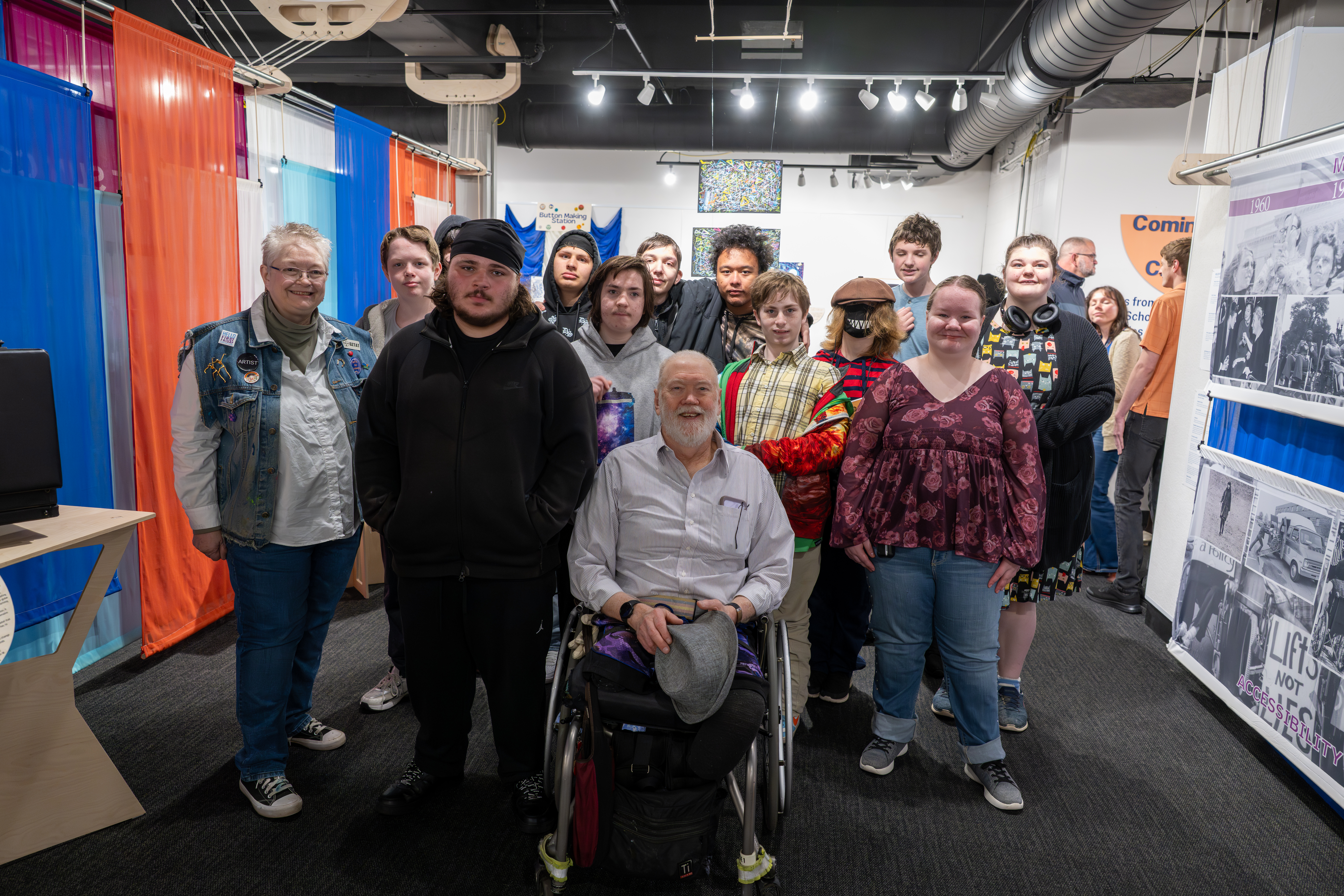
Dean Kahler is often quoted as saying he only had one bad day at 91˛Öżâ.
That day was May 4, 1970, when an Ohio National Guardsman's bullet struck Kahler as he stood under a tree watching, from what he thought was a safe distance, a student protest against the escalation of the War in Vietnam. When the National Guard fired on the students, a bullet pierced Kahler’s spine, leaving him paralyzed and wheelchair bound for the rest of his life.
In the 56 years since the shootings, Kahler has been an outspoken advocate for disability rights on the Kent Campus and beyond. That advocacy is being honored with a new exhibit that opened May 1 in the May 4 Visitors Center Reflections Gallery, on the first floor of Taylor Hall.
“Still Standing: Dean Kahler and Disability Rights” examines the legacy of May 4 through Kahler’s life and activism and features the work of a group of student artists who are living with disabilities of their own.
Kahler said the exhibition is deeply meaningful to him. “I’m not the only one who asks for access,” he said, explaining the scope of his advocacy to 91˛Öżâ Today.
Central to the exhibition is “Coming Full Circle,” a collection of artwork created by students from the Stark County Educational Service Center in Massillon, Ohio, in collaboration with the Canton, Ohio, BZTAT Studios and its owner, artist Vicki Boatright. Through this partnership, students reflect on their own experiences with disability, offering powerful perspectives that connect Kahler’s story to the realities young people experience today.

An opening reception for the exhibition took place on Kahler’s 76th birthday, May 1, where he greeted many supporters and viewed the student artwork from the project.
“It’s great,” Kahler said. “The kids are creative and proud of their work, which reflects a wide range of interests.”
Developing an Exhibit
The exhibit was curated by Alison Caplan, director of the visitors center, who said she has always been captivated by how Kahler, the most physically impacted of the students who were shot and survived, has managed to live with his disability without developing any bitterness.
When she heard him remark once that he had only had one bad day at 91˛Öżâ, Caplan said she was in awe of his “toxic positivity.”
Caplan said a generous donor to the visitors center, Corky Parks, who is a good friend of Kahler’s and has endowed an internship there in Kahler’s honor, the Dean Kahler Student Outreach and Engagement Internship, helped to make the exhibit a reality.

Through Parks, Caplan said she learned that Kahler allows four tenets to guide his life: reflect on history, promote democracy, engage in peace and practice forgiveness. She believed the time was right for a tribute to the exceptional way Kahler has lived his life since 1970.
“The idea of forgiveness and reconciliation and the way he has dealt with his experience on May 4 is so interesting to me,” she said.
The name of the exhibit, Caplan said, was inspired by a photo Howard Ruffner had taken of Kahler standing near a tree just moments before he was shot. Ruffner was a student photographer taking pictures on May 4, and some of his photos have become iconic images of the day. The photo has come to be known as the last picture of Kahler standing.
Caplan, however, said that Kahler never stopped standing. “Dean really speaks to what it means to be resilient,” she said.
Collaboration Expands
Typical of 91˛Öżâ projects, the exhibit became a collaboration of many layers, bringing faculty, students and artists to the table to create and learn while continuing to expand the discussion of disability rights.
Caplan began working with Molly Merryman, Ph.D., associate professor in the School of Peace and Conflict Studies, to bring the project to life. Merryman engaged Boatright and the Stark students, who have developmental disabilities or mental health issues, some of which have been brought on by trauma.
Merryman first worked with the young artists and Boatright last year, when they created a peace mural that was hung in the hallway of McGilvrey Hall, home to the School of Peace and Conflict Studies. The school began as the Center for Peaceful Change, which was opened after the May 4 shootings as a living memorial to the lives of the four students killed.
“Through last year’s project, we realized we had a shared interest in using visual methods to promote peaceful change. We decided that a traveling museum exhibition highlighting individuals who are neurodiverse as well as disability rights would be our next project,” Merryman said. “We reached out to the May 4 Visitors Center and other faculty and staff from the university, and together we decided that this provided a meaningful opportunity to tell the story of Dean Kahler's sustained work toward improving accessibility at 91˛Öżâ and throughout Ohio."
Additional collaborators included Associate Professor Bill Willoughby, who teaches interior design in the College of Architecture and Environmental Design, his interior design students and some of Merryman’s Peace and Conflict Studies students.
With their professors, the interior design students worked on design and fabrication of the exhibition, including innovative ways to display the students’ artwork, and looked at the exhibit from a disability perspective to ensure it is easily viewed and enjoyed by people with disabilities.

Kahler’s Work
Kahler began his disability rights advocacy when he returned to the campus to finish his studies and was faced with the challenges of steps with no ramps, no available transportation for wheelchair users and doors that were too heavy to be opened from a seated position.
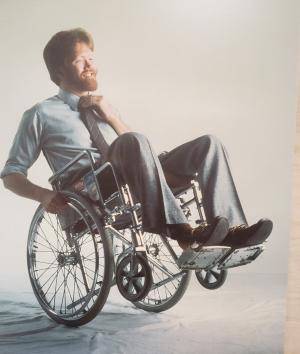
“When I returned to 91˛Öżâ in January 1971, there were 15 or 20 people with various kinds of disabilities that had been recruited to go to 91˛Öżâ,” Kahler said.
An active athlete before his injury, Kahler said he discovered many places on campus that were “unacceptable” for someone in a wheelchair.
“I was put on the school architecture board later that year and served into the next,” he recalled.
The world has become much more disability-friendly since 1970, and architects now factor accessibility into their designs, something that was not done 50 years ago, Kahler said.
Learning 91˛Öżâ May 4
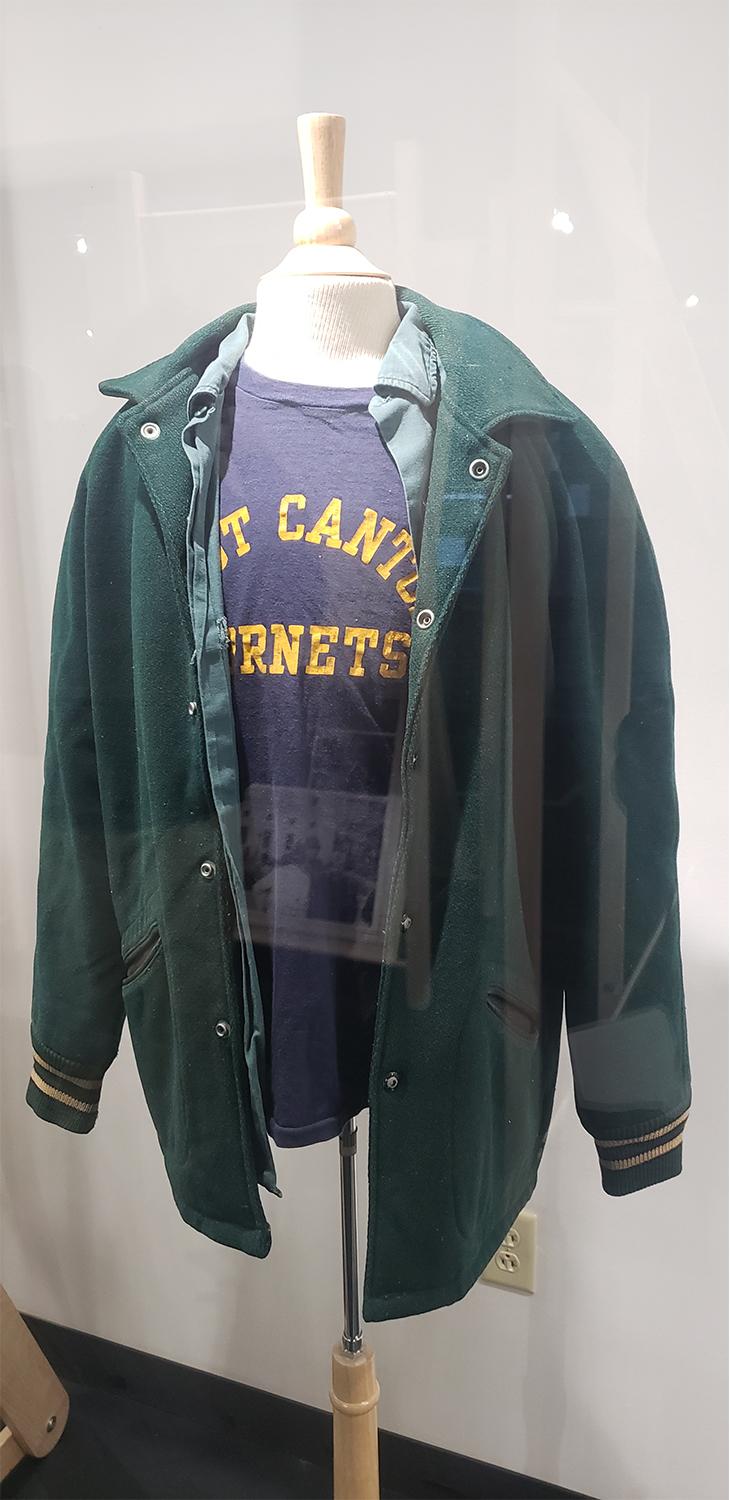
Work on the exhibition has been ongoing for more than six months. It features archival photographs of Kahler’s life, personal artifacts, original artwork and even the clothes he was wearing on May 4.
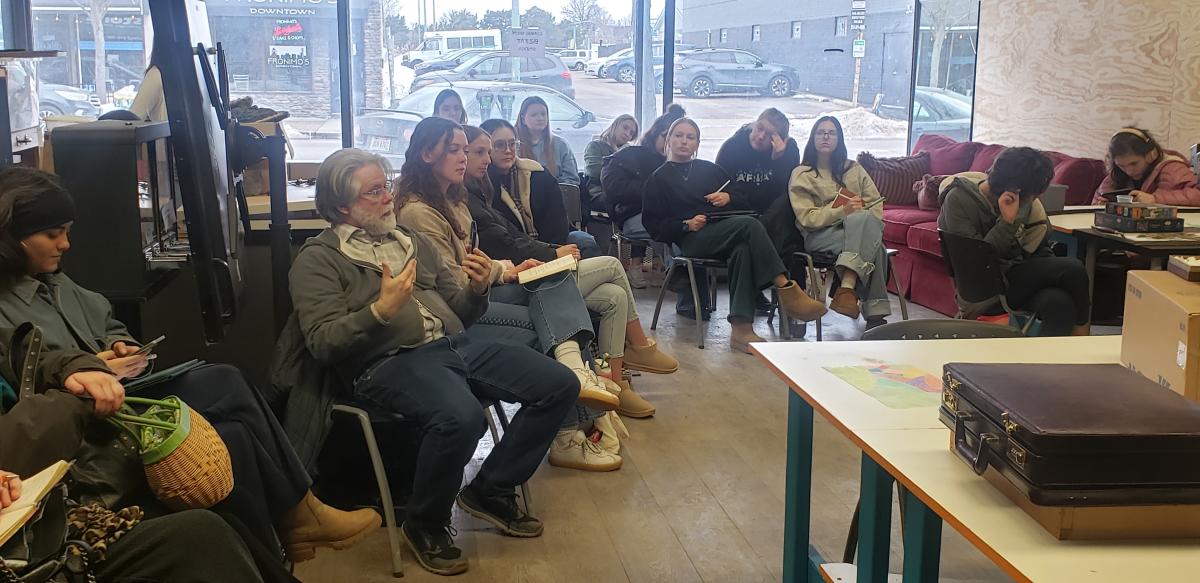
In December 2025, the high school artists visited 91˛Öżâ , where they learned about May 4 history and also met with Tony Snyder, a copyright and interlibrary loan associate, who also uses a wheelchair.
As the students learned about May 4 and reviewed historical documents, they also learned from Snyder about the challenges his disability has posed.

Jay Liedel, who teaches the high school class, said his pupils come from a variety of backgrounds and have not performed well in traditional classroom settings. He and Boatright have worked together for several years on various projects, and he has seen how art has helped to transform his students.
“The artwork relates to their struggles,” Liedel said.
Sharing Their Struggles
Over several months, the students, using a variety of recycled and upcycled objects, visited BZTAT Studios and created art expressing their experiences living with disabilities or their reflections on May 4.
Alex Hall, 16, chose a briefcase that he said represented opening up his life and taking a look inside. Inside were small houses representing his personal village, so others can “take a look at his life and his experience in school.”

Hall said his experience in a conventional classroom was not always positive, but in Liedel’s class, he found expression through his art, which is why he chose to paint the inside of the briefcase black but the building that represents school in shiny gold.
Ethan Herning, 15, created his art, entitled “All Ducks Go to Heaven,” using a glass jar with small plastic ducks at the bottom. Deeply moved by what he learned about the May 4 shootings, Herning reimagined the fallen students as “sitting ducks,” gently floating across a pond.
“I guess we were sitting ducks,” Kahler said of the art, noting how the same rifle his father carried during World War II is the one the National Guard used on him.
“I’m lucky to be alive,” he said. “And grateful to be alive every day.”
Video by Associate Professor Molly Merryman.