

Kathleen Casto and Beau Alward are the 2026 Frank A. Beach Early Career Award Winners
SBN is pleased to announce that Dr. Kathleen Casto and Dr. Beau Alward are this year鈥檚 recipients of the Frank A. Beach Early Career Award. Drs. Casto and Alward are making significant contributions and innovations to the field of behavioral neuroendocrinology and advance the field by their service to the society, by their commitment to mentorship, and by promoting a lab culture of inclusivity.
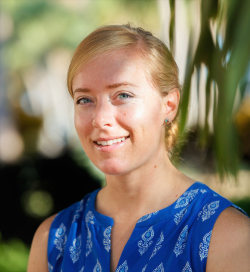
Kathleen Casto
Dr. Casto鈥檚 research seeks to uncover the role of hormones in driving social status and affiliation behavior, and the implications of these mechanisms for mental health risk. Dr. Casto has provided in-lab and real-world evidence for transient changes in the steroid hormones testosterone, cortisol, and progesterone during social competition, and how these responses are related to individual differences in task effort and competitive persistence in humans. Additionally, her research demonstrates how these relationships may be impacted by hormonal contraceptive use and the menstrual cycle.
Dr. Casto鈥檚 laboratory employs neuroimaging technology鈥攑rincipally near infrared spectroscopy (fNIRS)鈥攖o assess functional brain activity during novel social stress and competition paradigms. This approach allows for new evidence on how basal and dynamic changes in steroid hormones influence brain processes that regulate emotion and motivation in real time within these social contexts. New work in her lab also tests how hormonal underpinnings of the seemingly paradoxical needs for social status and social connection interact to drive unique patterns of social behavior and, likewise, unique patterns of risk for clinical conditions associated with social reward seeking and social withdrawal.

Beau Alward
The Alward laboratory employs an interdisciplinary and ethological approach to the study of social behavior, with an emphasis on how social experience reorganizes brain circuits and endocrine systems to drive adaptive behavioral plasticity. Social hierarchies require the coordinated recruitment of neural circuits, gene regulatory programs, and neuroendocrine signaling pathways, yet how social status is encoded across biological scales to produce both rapid behavioral transitions and enduring changes in brain function remains poorly understood.
Using the African cichlid Astatotilapia burtoni, a species with dynamic and reversible social hierarchies, the lab integrates quantitative behavioral analysis with single-cell and spatial transcriptomics, neuroanatomy, hormone manipulations, and CRISPR/Cas9-mediated gene editing to identify the cellular and molecular substrates through which social context shapes brain function in males and females. These approaches enable causal tests of how specific genes, circuits, and endocrine signals support status transitions and social competence. By defining how prior social experience alters the brain鈥檚 responsiveness to future social information, this work advances a mechanistic and comparative framework for understanding conserved principles that govern adaptive social behavior across vertebrates.